
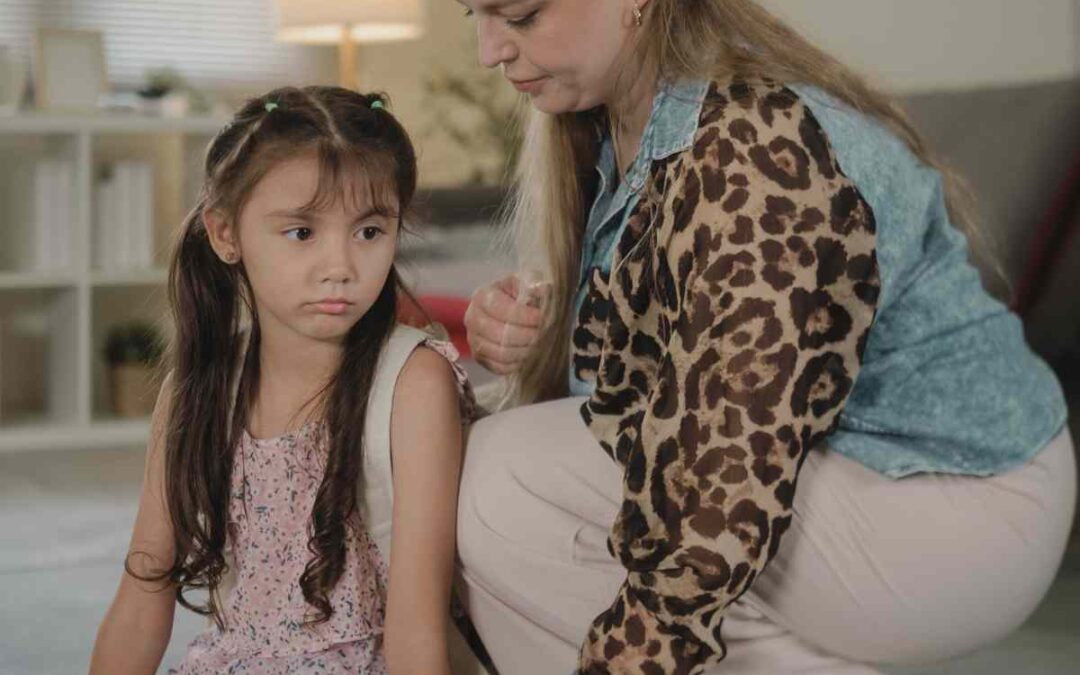
Emotional regulation in children is the developing ability to notice big feelings, stay connected while those feelings rise, and return to balance with support rather than pressure. It builds gradually through repeated experiences, not single lessons.
If this feels harder than it should, you’re not alone. Many children can manage emotions one day and unravel the next. That swing is common, especially when stress, fatigue, transitions, or new demands pile up. What looks like defiance or backsliding is often a nervous system doing its best with the load it is carrying.
This guide reframes dysregulation as a skill in progress, not a behavior problem to fix. You will learn how emotional regulation develops in the brain and body, why kids regulate sometimes and struggle other times, what parents can do at home that actually helps, and when extra support can strengthen skills without crisis, labels, or urgency.
Emotional Regulation Is a Developmental Skill, Not a Behavior Problem

Before it helps to talk about strategies, it helps to clear up a common misunderstanding. Many parents are taught to read emotional outbursts as behavior problems. When a child melts down after school, freezes at bedtime, or falls apart over something small, the instinct is often to correct, discipline, or stop the behavior. That reaction makes sense, but it misses what is actually happening underneath.
Emotional regulation is not something children choose or refuse to do. It is a developmental skill that strengthens over time through brain growth and repeated experiences of support. When regulation breaks down, it is usually a signal of overload, not defiance.
What Emotional Regulation Actually Means in Children
Yes, emotional regulation is about recovery, not control.
In real life, emotional regulation means a child can move through strong feelings and eventually return to balance with help. It does not mean staying calm all the time. It does not mean handling everything independently. It means the child can feel something hard and, with support, re engage with the world afterward.
This is where regulation gets confused with obedience or calm behavior. A child who appears quiet or compliant is not necessarily regulated. A child who cries, protests, or needs closeness may still be building regulation skills in healthy ways. Regulation is about what happens after the emotion shows up, not whether the emotion appears at all.
At a nervous system level, regulation is closely tied to the stress response. When a child feels overwhelmed, their body may shift into fight, flight, or freeze. That response is automatic, not chosen. Emotional regulation is the gradual ability to move out of that state and return to safety with support.
Self soothing is often mentioned here, and it matters to define it clearly. Self soothing is the ability to settle the body and emotions without external help. Children do not start with this skill. They build it over time through repeated experiences of being soothed by someone else first. Support comes before independence.
What Emotional Regulation Is Not
No, emotional regulation is not compliance or a measure of parenting quality.
It is not calming down on command. When a child is flooded with emotion, their nervous system is not in a state where commands can work. Expecting immediate calm often increases stress rather than resolving it.
It is also not proof of good or bad parenting. A regulated moment does not mean everything is working perfectly. A dysregulated moment does not mean something has gone wrong. Children with strong support still struggle at times because development is uneven and context matters.
Understanding regulation this way takes pressure off both the child and the parent. Instead of asking why a child will not behave, the focus shifts to what support their nervous system needs to recover. That shift is where real learning and resilience begin.
How Emotional Regulation Develops in the Brain and Body
It helps to pause here and look at what is actually developing when we talk about emotional regulation. This is not about willpower or maturity in the way adults often imagine it. Regulation grows out of the brain and body working together over time, shaped by experience, not instruction. Understanding that process can take a lot of pressure off both parents and kids.

Does Emotional Regulation Develop Naturally Over Time?
Yes, emotional regulation develops over time, but only with supported experience.
Brain development creates the capacity for regulation, but capacity is not the same as skill. A child’s brain matures gradually, especially the parts responsible for planning, impulse control, and emotional recovery. That maturation sets the stage, but it does not automatically teach a child how to handle big feelings.
Time alone does not equal regulation. A child does not simply outgrow emotional overwhelm by waiting. Regulation strengthens when children repeatedly experience stress in manageable doses while an adult helps them return to calm. Without that support, the brain does not get the practice it needs to wire regulation skills reliably.
This is why two children the same age can look very different emotionally. Developmental timing matters, but experience matters just as much.
Why Children Need Co Regulation Before Self Regulation
Yes, children need co regulation before they can self regulate.
Early on, a child’s nervous system relies on another person to help it settle. An adult’s calm voice, steady presence, and predictable response act as an external regulator. Over time, the child’s brain learns what calm feels like and how to return to it.
Attachment plays a central role here. Attachment simply means the child trusts that a caregiver will respond in a consistent and emotionally available way. That trust allows the nervous system to relax enough to learn. When caregivers stay present during distress instead of withdrawing or escalating, they are teaching regulation without needing to explain it.
Self regulation grows out of these repeated moments. Independence comes later, built on the memory of being supported first.
What Happens in a Child’s Nervous System During Big Emotions
Yes, big emotions trigger automatic stress responses in the body.
When a child feels overwhelmed, their nervous system may shift into fight, flight, or freeze. This response is fast and protective. It prepares the body to react, not to reflect. In this state, access to reasoning, language, and problem solving drops sharply.
The window of tolerance is a simple way to understand this. It refers to the range of emotional intensity a person can handle while staying connected and responsive. When a child is within that window, learning and communication are possible. When they move outside it, the nervous system focuses on safety instead.
This is why logic often fails under stress. Explaining, correcting, or reasoning with a child who is overwhelmed does not work because the brain systems needed for those tasks are temporarily offline. Regulation begins when the body feels safe again. From there, learning can resume.
Emotional Regulation by Age (Developmental Anchors)

Children develop emotional regulation at different speeds, and these anchors are not benchmarks to hit or miss. They are simple reference points to help parents understand what support usually looks like at different stages, without adding pressure or comparison.
Ages 2 to 4: Regulation relies almost entirely on adult co regulation and sensory support, with children needing consistent help to settle their bodies and emotions.
Ages 5 to 7: Language and routines begin to support regulation, but frequent adult presence and guidance are still necessary during stress.
Ages 8 to 11: Regulation skills strengthen, yet fatigue, transitions, and emotional load can still overwhelm the system, especially after long days.
Adolescence: Emotional intensity increases as the brain changes, and regulation capacity often lags behind feelings before gradually catching up.
These patterns describe typical development, not expectations for any individual child. Variability within each stage is normal, and support remains relevant at every age.
Why Emotional Regulation Looks Inconsistent From Day to Day

One of the most confusing parts of parenting is watching a child handle something well one day, then completely unravel the next. It’s easy to assume this means they are being inconsistent, resistant, or not learning. In reality, emotional regulation does not work like a skill that turns on and stays on once learned.
Inconsistent regulation reflects system overload, not a lack of skills.
When a child falls apart after managing something similar the day before, it usually means their internal capacity was stretched thinner. Regulation depends on available energy, safety, and support in that moment. When those resources are low, even well-practiced skills become harder to access.
Several everyday factors quietly drain a child’s regulatory capacity:
- Sleep debt builds quickly. Even small disruptions compound, making emotions harder to manage the next day.
- Hunger affects more than mood. A dysregulated body makes emotional balance harder to reach.
- Transitions require cognitive effort. Shifting from school to home, or play to homework, uses up regulation reserves.
- Cognitive load increases when kids are processing instructions, expectations, or social dynamics.
- Accumulated stress adds up across the day, even when no single moment seems overwhelming.
What this means for parents is simple but important. A child who struggles today is not showing regression or defiance. They are signaling that their system has less room to cope in that moment. With rest, support, and connection, that capacity returns.
How Parents Support Emotional Regulation at Home
Supporting emotional regulation at home does not require special techniques or perfectly timed responses. What matters most is the overall emotional climate a child experiences day after day. Regulation grows in environments that feel steady, predictable, and emotionally safe, even when things are imperfect.

Why Calm Adult Presence Matters More Than Perfect Responses
Yes, calm adult presence matters more than saying the right thing.
When a child is overwhelmed, their nervous system is scanning for safety, not logic. In those moments, kids naturally tune into the emotional state of the adult with them. This is often called nervous system matching. If the adult stays grounded, the child’s system has something stable to settle against.
This does not mean parents have to be emotionless or perfectly calm. It means showing what regulation looks like under real stress. Taking a breath, slowing your voice, or pausing before responding models something powerful. Children learn regulation by experiencing it in relationship, not by being told how to do it.
How Routines Support Regulation Without Being Rigid
Yes, predictable routines support emotional regulation.
Routines reduce the amount of mental work a child has to do just to get through the day. When meals, sleep, and transitions follow a familiar rhythm, the nervous system stays out of constant alert mode. That sense of predictability creates safety.
This does not require micromanaging every hour. What matters most are a few consistent anchors. A regular bedtime rhythm, reliable meals, and gentle transition cues help children conserve emotional energy. With fewer surprises to manage, they have more capacity to handle frustration, disappointment, or change when it shows up.
How Emotional Check-Ins Build Regulation Skills
Yes, short emotional check-ins help children build awareness and regulation.
These moments work best when they are low-pressure and brief. A simple noticing statement like you seemed really tired after school or that looked frustrating gives children language without demanding a response. Observation works better than interrogation.
Over time, hearing emotions named helps kids connect internal sensations to words. That language becomes a bridge to self-soothing later on. The goal is not to get children to talk more. It is to help them feel understood and supported, even when they choose not to say much at all.
How to Respond When Big Emotions Show Up

When a child is overwhelmed, most parents feel an immediate pull to make it stop. The crying, yelling, or shutdown can feel urgent, especially when everyone is tired or under pressure. The instinct to fix, explain, or move things along is understandable. The problem is that big emotions are not moments where learning or reasoning happens easily.
Why Fixing Feelings Too Fast Can Backfire
Yes, moving too quickly into fixing often makes regulation harder, not easier.
When a child is flooded with emotion, their stress response is active. In that state, the brain is focused on safety, not solutions. Jumping straight to problem-solving can unintentionally signal that the feeling itself is a problem that needs to be removed.
Validation comes before guidance because it helps the nervous system settle. Acknowledging that something feels hard tells the child they are not alone in it. Once the intensity drops, the brain becomes more available for reflection, learning, or next steps.
Reasoning also tends to fail during stress responses because access to executive function temporarily drops. This is why explanations that would normally make sense can feel invisible in the moment. Waiting until the emotion softens is not permissive. It is biologically informed.
What to Say and Not Say in the Moment
Yes, what you say matters, but how you show up matters more.
Presence-based language helps a child feel contained rather than corrected. Short, steady statements signal safety without demanding change.
Helpful responses tend to focus on observation and support. Naming what you see, offering closeness, or simply staying nearby can be enough to help the nervous system begin to settle.
Language that triggers shame or urgency tends to escalate distress. Statements that imply a child is overreacting, being dramatic, or choosing their response often increase defensiveness or shutdown. Even well-meaning reminders to calm down can land as pressure when the body is already overwhelmed.
In regulated moments, children can reflect on what happened and learn from it. In the middle of big emotion, the goal is simpler. Help the body feel safe first. Skills grow from there.
How Repair After Hard Moments Builds Emotional Regulation

Hard moments happen in real homes. Voices get sharper than intended. Patience runs out. A parent reacts instead of responding. What matters most is not avoiding those moments altogether, but what happens after them. Repair is the process that turns a rupture into a learning experience instead of a lingering wound.
Emotional regulation is not built in perfect interactions. It develops when children experience that relationships can stretch, settle, and reconnect without fear. Repair teaches the nervous system that conflict does not equal loss of safety.
Why Repair Matters More Than Getting It Right
Yes, repair matters more than getting it right the first time.
Children do not need flawless regulation from adults. They need to see what happens when emotions run high and then come back down together. Repair is not just an apology or a quick reset. It is a moment where emotional safety is restored and meaning is made.
When a parent acknowledges a misstep calmly and reconnects, the child learns several things at once. Emotions can be intense without breaking relationships. Mistakes are survivable. Connection returns after stress. These lessons strengthen regulation far more than perfection ever could.
Repair builds skills because it shows the full emotional arc, not just the calm ending.
What Repair Sounds Like at Different Ages
Yes, repair should match a child’s developmental stage.
With younger children, repair works best when it is brief and concrete. Simple language helps their nervous system settle without reopening the moment. A short acknowledgment followed by presence often does more than explanation.
With older children and teens, repair usually involves naming impact and allowing space. This might mean acknowledging how the interaction felt for them and staying available without forcing resolution. Respecting their need for distance while keeping the door open preserves trust and safety.
Across ages, effective repair is not about justifying behavior or revisiting the argument. It is about restoring connection so the nervous system can return to balance. Over time, these moments teach children that emotional storms pass and that relationships remain steady through them.
A Gentle Note on Temperament and Neurodiversity

As parents start to understand how emotional regulation develops, another question often surfaces quietly. Why does this seem to work for one child but not another? Even within the same family, regulation can look very different from child to child. That difference is not a problem to solve. It is information to listen to.
Temperament and neurodiversity shape how children experience their bodies, their emotions, and the world around them. Some children need more support, more time, or different kinds of input to feel regulated. That does not mean something is wrong. It means their nervous system takes a different path to the same goal.
Why Some Children Need Different Regulation Supports
Yes, some children genuinely need different regulation supports to feel steady and safe. This is not about diagnosing or labeling. It is about noticing patterns and responding with flexibility instead of force.
Sensory processing differences can change how a child experiences everyday life. Sounds, textures, movement, or light that barely register for one child may feel overwhelming for another. When the nervous system is already working hard to filter sensory input, emotional regulation can take more effort. Support may look like quieter transitions, more movement, or fewer competing demands, not tougher expectations.
Concrete strategies often work better than abstract ones for many children. Telling a child to calm down or think it through assumes they can access language and reflection under stress. Some children regulate more easily through action first. Holding something grounding, moving their body, or using a visual routine can help settle the nervous system before words make sense again.
Flexibility without labeling is the throughline here. Children do not need a name for why something is hard in order to receive support. Adjusting how support shows up does not weaken resilience. It protects it. When children feel understood rather than measured against a single standard, regulation becomes more accessible and trust stays intact.
This kind of responsiveness helps children learn that their needs are valid and manageable. Over time, that understanding becomes part of how they regulate themselves, not despite their differences, but because they were supported in ways that actually fit. Different support needs do not mean something is wrong; they usually mean a child’s nervous system needs a different path to feel steady.
When Emotional Regulation Challenges May Need Extra Support

There is a quiet line many parents walk for a long time. Things are not falling apart, but they are not easing either. A child keeps struggling in the same ways, and the usual supports no longer seem to help. Noticing that does not mean something is wrong. It means you are paying attention.
Extra support is not about jumping to conclusions or escalating concern. It is about recognizing when a child may need more help than everyday strategies can provide, and responding early rather than waiting for things to become overwhelming.
What Patterns Are Worth Paying Attention To
Yes. Patterns matter more than isolated moments.
All children have hard days. What signals the need for extra support is not intensity alone, but repetition and impact over time.
There are three gentle areas parents often notice first.
Pattern refers to whether the same challenges keep showing up in similar situations. For example, frequent emotional shutdowns at school drop-off, repeated meltdowns around transitions, or ongoing difficulty recovering after frustration. When struggles follow a predictable loop, it suggests the nervous system is getting stuck rather than practicing recovery.
Duration looks at how long emotions take to settle. Big feelings are expected. When distress regularly lasts much longer than a child’s age would suggest, or recovery does not seem to come even with support, that is useful information, not a red flag.
Impact focuses on how much these struggles interfere with daily life. This might show up as difficulty sleeping, withdrawing from activities they usually enjoy, or family routines becoming consistently tense. Impact is about function, not severity.
Taken together, these signs help parents decide whether additional support might be helpful, without turning observation into diagnosis.
Do Parents Need a Diagnosis to Seek Support?
No. A diagnosis is not required to ask for help.
Support can begin with curiosity rather than certainty.
Many families benefit from reaching out when questions arise, not when things reach a breaking point. Early support focuses on skill-building, nervous system regulation, and strengthening connection, not labeling a child. It can help parents better understand what their child is communicating through behavior and how to respond in ways that feel steadier for everyone.
Seeking support before a crisis often makes the process gentler. It allows families to explore options, build understanding, and adjust supports while stress is still manageable. That approach tends to feel less overwhelming for children and more empowering for parents.
Needing extra support does not mean everyday parenting has failed. It usually means a child’s nervous system needs more help than it can manage on its own right now, and that help can come in calm, thoughtful ways.
How Therapy Supports Emotional Regulation in Children

For many families, therapy brings up mixed feelings. There is curiosity, but also hesitation. Parents often wonder whether seeking support too early might make things feel bigger than they are. That pause makes sense. Therapy is often misunderstood as something reserved for crisis, rather than a place to build skills while stress is still manageable.
In reality, therapy that supports emotional regulation is less about fixing problems and more about strengthening capacity. It focuses on helping children and caregivers understand what is happening in the body and respond in ways that feel steadier over time.
Can Therapy Help Even If Things Aren’t That Bad?
Yes. Early support can help before patterns harden.
Therapy does not require a breaking point to be useful.
Many children benefit from support when emotions feel sticky rather than extreme. Maybe meltdowns linger longer than expected. Maybe worries repeat even after reassurance. Maybe recovery takes more effort than it used to. At this stage, therapy works preventively. It helps children practice regulation skills while their nervous systems are still flexible, and it helps parents adjust responses before stress becomes the default rhythm at home.
For families who want guidance rooted in emotional safety and collaboration, working with providers who focus on emotional regulation for children can help reinforce these skills without pressure.
What Therapy Actually Helps With
Yes. Therapy supports regulation by strengthening skills and relationships.
The work is practical and grounded, not abstract or clinical.
Rather than fixing feelings, therapy supports the processes that help emotions move through more smoothly over time.
- Skill building for regulation. Children learn age-appropriate ways to notice emotions, tolerate discomfort, and recover after stress. This may involve body awareness, coping strategies, or language for feelings, depending on the child.
- Nervous system support. Sessions are paced to help children stay within a manageable range of emotion. Over time, this helps widen their capacity to stay regulated during everyday stress.
- Parent child alignment. Therapy often includes caregivers so that support at home matches what the child is practicing. When adults understand how regulation develops, responses tend to feel calmer and more consistent.
Therapy also supports the parent-child system as a whole. Parents gain insight into what their child’s behavior is communicating and how to respond in ways that reduce escalation. When caregivers and children learn together, regulation becomes a shared skill rather than something a child is expected to manage alone.
Therapy as Support, Not a Last Resort
Yes. Therapy works best when it is relationship-centered, not crisis-driven.
Support does not require labels, guarantees, or long-term commitments to be meaningful.
In a healthy therapeutic setting, the relationship comes first. Children are met where they are, and parents are included as partners in the process. There is no pressure to define a child by a diagnosis or to promise specific outcomes. The goal is steadiness, not transformation.
When families work with therapists who prioritize collaboration and emotional safety, therapy often feels like an extension of supportive parenting rather than a replacement for it. That is why many parents find it helpful to meet the therapists involved and understand their approach before starting. Feeling aligned with the people offering support matters just as much as the strategies themselves.
Therapy, when introduced gently and thoughtfully, reinforces a simple message for children and parents alike. Hard feelings are manageable, support is available, and growth does not require waiting until things fall apart.
Common Parent Questions About Emotional Regulation

Parents usually arrive at this point with a mix of concern and self doubt. When emotional regulation feels hard, it is natural to wonder whether you missed something or should be doing more. This section answers the questions that come up most often, plainly and without blame.
Is It My Fault If My Child Struggles to Regulate Emotions?
No. A child’s struggle with regulation is not a reflection of parenting failure.
Emotional regulation develops over time and unevenly. Children can be well supported and still have a nervous system that becomes overwhelmed by stress, change, or fatigue. Struggle is part of development, not proof that something went wrong. What matters most is whether a child feels supported while skills are still forming.
Will My Child Grow Out of This?
Yes and no. Development helps, but support shapes how skills grow.
As the brain matures, children gain more capacity to manage emotions. At the same time, regulation does not improve just by waiting. Skills strengthen through repeated experiences of support, recovery, and connection. Time helps. Experience helps more.
Can Emotional Regulation Be Taught?
Yes. Emotional regulation can be learned through supported practice.
Regulation is not a personality trait. It is a skill built through modeling, co regulation, and gentle guidance over time. Children learn by experiencing calm with someone else before they can create it on their own. Teaching happens through everyday moments, not lectures or corrections.
What Is the Difference Between Tantrums and Meltdowns?
Yes. They are different, even though they can look similar.
Tantrums are usually goal driven. A child is upset and trying to change an outcome. Meltdowns happen when the nervous system is overwhelmed and skills temporarily disappear. In those moments, a child is not choosing behavior. They are losing access to regulation. The response that helps is support, not consequence.
Can Emotional Regulation Improve Without Therapy?
Yes. Many children build stronger regulation through consistent support at home.
Predictable routines, calm adult presence, and opportunities to recover from stress all support regulation. Therapy becomes helpful when challenges persist, escalate, or interfere with daily life. Support is a tool, not a requirement, and improvement can happen along many paths.
If there is one thing to hold onto, it is this. Emotional regulation is a process, not a verdict. Children do not need perfect responses or constant intervention. They need steady relationships that allow skills to grow at a pace their nervous system can handle.
Key Things to Remember as a Parent
When emotions run high and days feel uneven, it helps to come back to a few steady truths. Emotional regulation is not something you install or correct. It is something that grows slowly through everyday experiences. These reminders are here to ground you, especially on the days when doubt creeps in.
- Regulation develops over time. Emotional regulation is a developmental process, not a switch that flips once a child reaches a certain age. Skills build through repeated experiences of stress followed by recovery. When progress feels slow, it usually means skills are still forming, not that they are missing.
- Connection builds capacity. Children regulate best when they feel emotionally safe. That safety comes from connection that is consistent, calm, and responsive. When a child knows they are not alone with big feelings, their nervous system has more room to settle and learn.
- Repair strengthens safety. Moments of misalignment happen in every family. What matters is what follows. Repair teaches children that relationships can stretch without breaking. A simple return to connection often does more for regulation than getting it right the first time.
Progress does not look like constant calm. It looks like shorter recovery times, fewer spirals, or asking for help a little sooner. Progress matters more than perfection.
And finally, support is not failure. Seeking guidance, adjusting routines, or asking for help does not weaken resilience. It protects it by making sure children are not carrying more than they are ready to manage on their own.
If nothing else sticks, let this one stay with you. You do not need to do this perfectly for emotional regulation to grow. You just need to stay present enough, often enough, for skills to keep forming.

Supporting Emotional Regulation at Home This Week
When families decide they want things to feel steadier, the instinct is often to change everything at once. New rules. New routines. New expectations. That usually adds pressure instead of relief. Emotional regulation responds better to small, repeatable shifts that lower stress and make safety easier to feel.
This is not a plan to fix your child or overhaul your household. It is a gentle reset that gives the nervous system more room to settle so skills can keep forming.
What Is a Realistic 7 Day Reset Plan for Families?
Small shifts work better than overhauls.
A realistic reset focuses on a few anchors you return to each day. Not perfectly. Just consistently.
Start with one daily check in that stays low pressure. A question like What felt hard today or What felt okay today creates space without demanding a full conversation. The purpose is not insight. It is letting your child know their inner world is welcome.
Next, protect one short connection block each day. Ten uninterrupted minutes often matters more than an hour of distracted time. Sitting together, playing, walking, or sharing quiet space without teaching or correcting sends a clear signal of safety.
Choose one routine adjustment that softens the day. For many families, this means an earlier wind down or a calmer transition after school. The goal is not control. It is reducing mental load so recovery comes easier.
Finally, hold one predictable boundary steady. This might be a clear screen cutoff or a consistent morning rhythm. Predictability matters more than strictness. When expectations stay stable, nervous systems do not have to stay on guard.
None of these steps work because they add effort. They work because they reduce friction.
If you notice your child settling faster, recovering more easily, or needing less support over time, that is regulation strengthening quietly. For families who want additional guidance, learning more about how Cobblestone Collective supports mental health service in Saint Charles, Missouri children and caregivers can be a helpful next step, without urgency or pressure. You do not need to do this perfectly. You just need to stay steady enough, often enough, for growth to keep happening.